Showing posts with label books. Show all posts

Wednesday, April 4, 2012

Heaven for Kids

What happens when we die? Do people in heaven remember life on earth? Will animals live in the new heavens and new earth? What will we do in heaven? These are not just questions for adults. Many kids are asking these questions too.

Here’s a free book on Heaven by Randy Alcorn that addresses some of the common questions and misunderstandings about heaven. It’s geared toward a younger audience but it has something we can all learn!

If you’re interested in a fuller treatment of the subject, check out Alcorn’s larger volume on Heaven. I also heartily recommend Paul Enn’s Heaven Revealed and Erwin Lutzer’s One Minute After You Die.
These are far more biblical than the runaway bestsellers 90 Minutes in Heaven by Don Piper or Heaven is for Real by Todd Burpo. Why expend a lot of time reading about subjective dreams/experiences/visions when we have “something more sure, the prophetic word, to which you will do well to pay attention as to a lamp shining in a dark place” (2 Pet. 1:19)?

Paul says a crown of righteousness awaits all who love and anticipate the Lord's appearing (2 Tim. 4:8). Do you long for the return of our Lord? This book is sure to get your family excited for our heavenly home.

Thursday, March 8, 2012

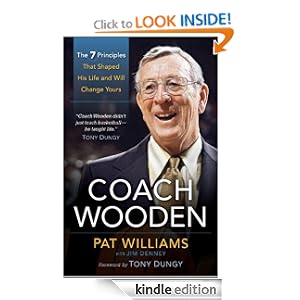
Coach Wooden

If you like sports and want to see a down-to-earth example of how a dad can influence his son, you may enjoy Coach Wooden by Pat Williams. It’s free on Kindle today only.

At first glance, the book does not look expressly evangelical. It belongs more in the category of wisdom. Like in Proverbs, a father is training up his son, pointing him in the right direction, warning him of danger, and leading by example. The book description says, ‘Through powerful stories and advice, this book shares the wisdom that made Wooden happy and successful, not just in his career but in life.’

Wooden's seven life principles include:
  1. Be true to yourself
  2. Help others
  3. Make friendship a fine art
  4. Drink deeply from good books, especially the Bible
  5. Make each day your masterpiece
  6. Build a shelter against a rainy day by the life you live
  7. Give thanks for your blessings and pray for guidance every day

We should be cautious of self-help language like ‘believing in yourself’ and ‘achieving your dreams.’ But we can still rejoice when a good story elevates fatherhood and spiritual disciplines like reading, love, serving, and prayer. John Wooden is one of the most respected coaches in the history of basketball, and there is something we can all learn from his life.

Friday, December 23, 2011

Books, books, books

It’s hard to overstate the importance of books in the Christian life. C.J. Mahaney shares how his salvation and a love for reading went hand-in-hand:
“Before that evening when Bob told me the gospel, I literally knew nothing of God or His Word. I’d never cracked open a Bible. But from the day of my conversion I couldn’t get enough of Scripture or Christian books. Not long after my conversion, I got a job at a Christian bookstore just so I could read as much as possible” (Living the Cross-Centered Life, p. 148).

Donald Whitney observes, “I’ve always found it to be true that growing Christians are reading Christians. For some it’s a habit they find hard to develop…But let me encourage you to find some time to read anyway, even if it’s no more than one page per day and one book per year” (Spiritual Disciplines for the Christian Life, p. 221).

Here’s a list of books I read in 2011. Some were deeply convicting or comforting; others were purely amusing and relaxing.

A Praying Life: Connecting with God in a Distracting World by Paul Miller

The Adventures of Sherlock Holmes – Kindle Edition by Sir Arthur Conan Doyle (in progress)

The Bible by God (I’m currently reading through the New Testament)

The Book of Awesome by Neil Pasricha

“But God…”: The Two Words at the Heart of the Gospel by Casey Lute

The Christmas Sweater by Glenn Beck, Kevin Balfe and Jason Wright

Cruciform: Living the Cross-Shaped Life by Jimmy Davis

Getting Back in the Race: The Cure for Backsliding by Joel Beeke (in progress)

The Evangelicals: What They Believe, Where They Are, and Their Politics by Christopher Catherwood

Flip Flop Fly Ball: An Infographic Baseball Adventure by Craig Robinson

Heaven Revealed: What is it Like? What will we Do? … And 11 Other Things You’ve Wondered About by Paul Enns


How to Meet the Enemy: Arming Yourself for Spiritual Warfare by John MacArthur (in progress)

Intentional Parenting: Family Discipleship by Design by Tad Thompson

Licensed to Kill: A Field Manual for Mortifying Sin by Brian Hedges

Living by God’s Promises by Joel Beeke (a couple chapters)

Navajo Code Talkers by Nathan Aaseng

The Next Story: Life and Faith after the Digital Explosion by Tim Challies

Presentations in Action: 80 Memorable Presentation Lessons from the Masters by Jerry Weismann

The Organized Heart: A Woman’s Guide to Conquering Chaos by Staci Eastin

Pujols: More than the Game by Scott Lamb & Tim Ellsworth

Sexual Detox: A Guide for Guys who are Sick of Porn by Tim Challies

The Sword: A Novel by Bryan Liftin (just started this one)

Trusting God: Even When Life Hurts by Jerry Bridges

What Every Body is Saying: An Ex-FBI Agent’s Guide to Speed-Reading People by Joe Navarro

What is the Mission of the Church? Making Sense of Social Justice, Shalom, and the Great Commission by Kevin DeYoung and Greg Gilbert (in progress)

Each of these books had a unique role to play and shaped my thinking in new areas. It’s hard to know which influenced me the most. Apart from the bible, I think it’s a three-way tie between A Praying Life, Trusting God, and Heaven Revealed. All of them ministered to me deeply as my family went through so much suffering this year. They really became dear friends that brought comfort and food to my soul, and helped me better care for my wife and others.

So what have you been reading lately? What was your “Book of the Year”? Do you have any books you plan to read in 2012?

Sunday, October 9, 2011

Why I switched to ESV

You may have noticed a change in the Bible I preach from. That's because, after testing the Holman Christian Standard Bible for almost a year, I've finally decided to go with the ESV.

This was a tough decision. I grew to love the accuracy and freshness of the HCSB, its translation of doulos as 'slave,' and its innovative bullet note system. But at the end of the day, the HCSB is simply too different from its cousins in the Tyndale tradition like ESV, NASB, and NKJV.

I could tell that people who came to church with another translation were having a hard time tracking with me as I preached from the Holman. And some verses that I've memorized over the years sound radically different in the HCSB. Plus, it has a few quirks like alternating between "Christ" and "Messiah" (e.g. Eph. 2:13) and the awkward phraseology "this is the Lord's declaration" (Jer. 31:31 et al).

The ESV has clearly grown in popularity among evangelicals, particularly those in the "Young, Restless, and Reformed" movement (thanks in large part to John Piper). It is accurate and elegant, and is becoming the predominant translation of my generation. It still sounds a bit antiquated at times, but much less than the KJV or even the NASB. Some of its advantages are its widespread availability, great study Bibles like the MacArthur Study Bible and ESV Study Bible, and its full integration with Logos Bible Software.

I still like the Holman Bible and expect to refer to it often in my teaching. But after a year of experimentation, I've joined the masses and will do all of my teaching and personal Bible study out of the ESV. Already, the feedback has been positive, and I'm relieved to finally settle down and begin marking up my new friend, an ESV Large Print Calfskin Bible.

Thursday, August 4, 2011

Book review: Flip Flop Fly Ball

flipflopflyballWhether you’re a baseball fanatic or a rookie to the game, you’re sure to enjoy Flip Flop Fly Ball: An Infographic Baseball Adventure by Craig Robinson.

The book begins with a personal tale - the quirky romance of a British young adult with the game of baseball. “There was something about the leisurely pace, the ebb and flow, the drama inherent in a sport where the ball is in play for such a small percentage of the total time, the unique proportions of the ballpark, the shape of the field, the uniforms. The fizzing joy in my head after seeing a swiftly turned double play, the one-on-one battles at the heart of a team sport…it all felt right.”

Robinson’s pilgrimage into the game is interwoven with art, photos, and infographics all about baseball. The author has an insatiable curiosity that results in all kinds of random and at times even educational charts. Some of the infographics are just plain fun. Others cater to the trivia buff. A few are absolutely brilliant. The opening graphic “Professional Baseball History in the United States” captures the entire history of baseball since 1855 and is alone worth the price of the book.

The only downside is a little crass language and several references to beer in his travelogue sections, but nothing you wouldn't likely encounter at an actual baseball game. Like anything else, we need to read with discernment and be able to recognize when an author does not have Christ in his life. The book could spur some good discussion on the shortness of baseball fame, even by the greatest players of the game. Also in how we should glorify God in whatever we do - whether we eat, drink, or play baseball. Both the players and the spectators make choices that can either honor or dishonor God. God wants us as Christians to enjoy the game of baseball and use our talents and love for the game as a way to give Him glory.

Crack open this oversized coffee-table book and you’ll see baseball in a whole new light. But be careful. You might just fall in love with the game like Craig Robinson has.

Thursday, June 2, 2011

Evangelical Exegetical Commentary


The first volume of the Evangelical Exegetical Commentary was just released, and I'm thrilled to be holding it in my hand ... uh, I mean seeing it on my screen.

The book was just released ten minutes ago, and it's already been downloaded and fully integrated into my Logos Bible Software. Ezra/Nehemiah by Israel Loken is the first of 44 volumes that will be produced in this series over the next decade. At first glance, the book looks outstanding.

There are two things that make the EEC truly unique. First is its rich exegetical content. With H. Wayne House as General Editor, the EEC promises a conservative, contemporary, and in-depth approach to exegesis. The editors write in their Preface,

In this series, the biblical books are studied with the tested tools of biblical scholarship, keeping in mind that these books, produced by human authors, come from the very mouth of God (2 Tim 3:16). The EEC reflects the important interpretative principles of the Reformation, while utilizing historical-grammatical and contextual interpretative methods.

Secondly, the EEC is the first of its kind to be published in the digital age and first published in electronic form. Here we see technology at its very best, being used to draw us closer to God and His Word. Again, from the editors:

The EEC is the very first commentary series produced first in electronic form. Doing this has enabled Logos to link each volume to the other resources of their massive electronic library. Additionally, the electronic volumes may contain such items as charts, graphs, timelines, and photos. Another benefit of the electronic edition is that authors will be able to add to their original contribution when new archaeological discoveries or additional insights become available. Thus, the owner of this series can benefit from an expanding resource. The EEC is scheduled for completion in half the time of comparable series. The dedication of the authors and the Logos Bible Software staff make this possible.

How cool is that? These books might actually grow as new research is uncovered.Once again, Logos has exceeded my expectations.

Each section in Ezra/Nehemiah contains the original Hebrew text, textual notes, translation, commentary, applicational and devotional implications, and selected bibliography. Here's a sample screenshot:


While it's too late to get the rock-bottom pre-pub discount on the EEC, you can still order the set at a good price.

Friday, April 29, 2011

Book review: The Official Joomla! Book

Whether you're looking for information, a product, or local service, chances are one of the first places you'll check is online. In today's world, every organization needs a web presence, and with Joomla!, this has never been easier.

Joomla! is a free content management system (CMS) for creating websites and applications. Our church has been using Joomla! for the past five years and has been very satisfied. There's always been help available at the Joomla! forum (http://forum.joomla.org/) and Joomla's wiki-style documentation site (http://docs.joomla.org/), but  nothing beats an old-fashioned physical book in hand to browse through, markup pages, see the big picture, and have new ideas at your fingertips.

The Official Joomla! Book is more than just a user's manual. It's a whole introduction to web design. The author's goal is to help you build an effective website. Joomla! just happens to be their tool of choice. The authors accomplish their goal by looking not only on the anatomy of Joomla!, but also discussing the purpose and branding of a company, strategic importance of the home page, and an appendix of helpful links that extend well beyond the boundaries of Joomla! I was glad to see after several chapters of technical instruction on the program, the authors include extensive practical applications in the area of business, nonprofit groups, and education.

The book has a clean layout, a helpful glossary and index, and generous use of illustrations. Whether you're an experienced Joomla! user or just getting ready to build your first website, The Official Joomla! Book could be a real help to your company or organization.

Wednesday, March 30, 2011

Book Review: The Lord's Prayer

When the disciples asked, "Lord, teach us to pray," Jesus did not simply tell them. He showed them. He modeled for all of us how we can talk to God in words that are simple yet profound. This prayer, known as "The Lord's Prayer," has endured for two thousands years, and is now available in a new edition by Rick Warren and Richard Jesse Watson for a new generation to discover. I read this book last night to our 3-yr old daughter and 5-yr old son. We all enjoyed looking at the artwork and discussing the meaning of Jesus' precious words.

The Lord's Prayer introduces us to all the important elements of prayer: Adoration. Submission. Supplication. Confession. A longing for heaven. This kids' edition pairs the poetic beauty of the King James Version with the beautiful artwork of Richard Watson. Watson creatively depicts the wonder and almost whimsical nature of prayer through the trusting eyes of a child. At times, I would like to see a clearer connection between the illustrations and the content of Scripture. Some of the images are brilliant (a girl feeding sparrows to show how God supplies our daily bread), while others are just too abstract (two children walking hand-in-hand up a stairway to show God's eternal glory).

By depicting children from many countries, Watson gives the book a multicultural flavor and shows that God invites people of all ages and nationalities to talk to Him through His Son. The brief prayers and explanatory notes by Rick Warren at the back of the book are a great addition, and can provide great talking points for parents. All in all, The Lord's Prayer could be a good tool to help introduce children to the power and beauty of the Lord's prayer.

Wednesday, February 16, 2011

Book review: Wycliffe Bible Commentary

Someone recently asked me what I thought of the Wycliffe Bible Commentary. Overall, it's a good conservative commentary.

Though relatively brief (the 1990 edition is only one volume), the WBC goes a step deeper than today's Study Bibles like the MSB, ESV, and HCSB which have notes alongside the text. However, it's certainly not as deep (or expensive) as a more scholarly multi-volume commentary. The WBC is rather dated (originally published in the early 60s) and fairly light on application, but could be a very good starter tool for Bible students and teachers.

Jim Rosscup, in his book Commentaries for Biblical Expositors, says, “Conservative and premillennial scholars here have been experts in their fields. The work contains brief introductions and attempts to give a verse-by-verse exposition, though it does skip over some verses. The treatments vary with the authors, but as a whole it is a fine one-volume commentary for pastors and students to use or give to a layman. Outstanding sections include, for example: Whitcomb on Ezra-Nehemiah-Ester; Culver on Daniel; Ladd on Acts; Harrison on Galatians; Johnson on 1 Corinthians; and Ryrie on Johannine Epistles.”

Below is a description from the book’s introduction:
The Wycliffe Bible Commentary is an entirely new commentary on the whole Bible written and edited by a number of scholars representing a wide cross section of American Protestant Christianity. Within the limits of its more than a million and one-quarter words, it attempts to treat the entire text of the Old and New Testaments on a phrase by phrase basis. In addition, summaries of the major sections of each Biblical book generally appear in the text in connection with the main headings in the outline. Thus, the reader is permitted an overview and a detailed discussion of a passage of Scripture at the same time.

In the commentaries on the various books the writers present the results of their own careful, personal Bible study. But also they have preserved some of the best work of the older commentators and have utilized the insights of contemporary scholarship. While they infuse the whole with a fresh spirit, at the same time they manifest their unflinching belief in the divine inspiration of Holy Scripture...

The basic aim of this volume is to determine the meaning of the text of Scripture. It is therefore, strictly speaking, neither a devotional nor a technical exegetical treatment. It seeks to present the Biblical message in such a way that the serious Bible student will find extensive help within its pages.

If you're looking for a single-volume commentary on the Bible, then the Wycliffe Bible Commentary may be just for you.

Tuesday, February 1, 2011

Sovereign Grace sale

New from Sovereign Grace Ministries...

Our annual February Sale kicks off today, and this year we are dropping our prices a little lower than in the past: 30% or more off books, music, DVDs, and everything else in the store. Free U.S. shipping remains in place for orders of $15 or more. 

Here is a sampling of the deals available:

Saturday, January 8, 2011

Book review: Politics According to the Bible

The Bible and politics. Do these two words even belong in the same sentence? For Wayne Grudem, the answer is an unequivocal 'yes.' And I agree. If we believe the Bible speaks to every matter of life, then surely it has something to say about politics. In fact, it might surprise us to see just how MUCH God's Word has to say about this subject.

If you're looking for a handbook that introduces you to the U.S. Government and contemporary political issues from a Christian perspective, then a great place to start might be Politics According to the Bible.

In part one, Grudem lays down some basic principles of government and society, dealing with issues like Christian involvement, influence, rule of law, worldview, and the role of the courts. In part two, Grudem applies these principles and turns to specific issues like the sanctity of life, marriage, family, economics, environment, national defense, and first amendment rights.

This is not a comprehensive political theology, but I do appreciate Grudem's ability to take a complicated subject and break it down into bite-size pieces. For each political topic, he offers pertinent Scriptures, a historical perspective, very contemporary examples, and interacts with case law. At times, he also provides suggested resources for further study.

Grudem is at his best when he put politics in an eternal perspective: God is sovereign. Christ will one day reign. Salvation is a work of God. And true change involves spiritual revival. On p. 601 he says the basic role of the Christian in politics is to work to protect the freedoms necessary to bring about revival, creating the legal ‘space’ in which others can act to bring true transformation. This seems consistent with 1 Tim. 2:2. But even then, our deceitful hearts can easily have our priorities mixed up. Revival must never become a means to an end (political utopia), but rather be an end in itself (forgiveness and reconciliation with God), which may bring with it certain benefits to society and government.

Tuesday, January 4, 2011

A review of the HCSB Study Bible

Today, I finally had a chance to browse through a copy of the new HCSB Study Bible.

The HCSB Study Bible is 2272 pages long (plus a few maps). As expected, the translation is the Holman Christian Standard Bible (HCSB) version. It ranks well and rivals the ESV in both exegetical accuracy and literary quality. Some of its unique features are:
  • Its translation of yahweh as "Yahweh" (instead of LORD) in the OT when referring to the personal name of God (e.g. Ex. 3:15)
  • The translation of doulos as "slave" instead of "servant" or "bondservant" in the New Testament (e.g. Rom. 1:1)
  • The translation of christos as "Messiah" in the New Testament, whenever referring to the Jewish expectation of the Messiah (e.g. Matt. 16:16)
  • Capitalized pronouns when referring to God
  • The use of contractions in direct discourse (e.g. "let's go" in Mark 1:38)
  • A wonderful feature called bullet notes (small bullets next to key words that may be unfamiliar, pointing you to a glossary of common biblical terms; e.g. 'propitiation' in Rom. 3:25).
  • A willingness to alter familiar passages for the sake of accuracy. (e.g. "for God loved the world in this way" in John 3:16. You can read a fascinating article by Dr. Bill Barrick on this subject, and see his high scoring of the HCSB).
  • An innovative approach to Bible translation called "optimal equivalence," which retains the literal wording of Scripture except in cases where the idea is not easily conveyed in English. Then, the HCSB opts for a more "dynamic" translation to the text. This can really aid in reading, understanding, and memorizing the text.
  • A second edition in 2009 which further improved the translation and corrected a few unfortunate choices by the original translation team.

Additional tools include thorough study notes, charts, maps, word studies, architectural illustrations, timelines, photos, and over 25 essays by renowned scholars such as Daniel Wallace, Bruce Ware, and Kenneth Kitchen. Book introductions are helpful, though not quite as exhaustive as the MacArthur Study Bible or ESV Study Bible.

The theological viewpoint of the notes and essays are conservative, and lean Baptistic and dispensational. For example, the note under Romans 11:25-27 says,
A mystery has been revealed by God: (1) A partial hardening has come to Israel; (2) this will continue until a full number of the Gentiles com in; and (3) then all Israel will be saved. "Israel" is the name for the Jewish people. It is used 70 times in the NT of Jews, Hebrews, or Israelites. It is not used as a title for the church. Galatians 6:16 is not an exception; it refers to saved or godly Jews as "the Israel of God." Here in verse 26, "all Israel" means there will be a conversion of the Hebrew nation. It does not mean that every single Jew living will be saved. Salvation is defined in verses 26-27 as the new covenant that the Messiah will inaugurate.

This is a positive feature that distinguishes it from the ESV Study Bible. But regardless of one's ecclesiology or eschatology, every Bible student will find a strong commitment to Scripture. In his opening comments, the General Editor Jeremy Royal Howard writes,
"The goal of each tool in this study Bible, whether notes, essays, book introductions, maps, charts, or the online study component (hcsbstudybible.com), is to serve the text of Scripture by bringing to light facts that aid comprehension. As servants to the text, the study tools are designed to keep the focus on Scripture and never on the too.ls themselves. Practically speaking this approach is demonstrated by the fact that the text of Scripture is never positioned beneath a study tool. The uppermost feature on any given page is the text of Scripture itself. Theologically speaking our text-centric approach is reflected in the fact that each of our contributors honors the Bible as God's inspired and inerrant Word."

The HCSB Study Bible has the most effective use of color I've ever seen in a Bible translation (at least since the days of illuminated manuscripts). Book introductions are printed on pages that resemble ancient parchment. Verse numbers are marked in a subtle blue, pericope headings appear in brown, and the marginal notes are set apart in a tan. Holman has long featured some of the best maps available in their Holman Bible Atlas, and these maps look great in the HCSB Study Bible, though the font is a bit small. Font size of the biblical text is easy on the eye, and the genuine leather edition feels comfortable and sturdy.


To learn more, check out the complete notes of the HCSB Study Bible online for yourself, or view this sample of the book of Matthew.

While there are already some great study Bibles on the market, I believe the HCSB Study Bible makes a valuable contribution to our study of God's Word, and would heartily recommend it.

Related post:


Photo credits: Robert Jimenez

Monday, December 13, 2010

Shop at Amazon and support a pastor


Need to do some last-minute Christmas shopping? If you like to shop online at Amazon, you can support my ministry by clicking through this linkwhen you shop.

Just by using the link, I receive a percentage of your purchase. There's no extra cost to you! So for example, if you spend $100 at Amazon this year on Christmas gifts, I'll automatically get a $4 credit. This program is available all year long, not just at Christmas time. Any time you shop at Amazon, use the link, and you'll be supporting my book fund. (An easy way to do this is to bookmark my blog home page, then use the Amazon link in the bottom right corner.)

This past year, I was able to buy two books with my affiliate credits:
The Great Commission Resurgence: Fulfilling God's Mandate in Our Time, edited by Adam Greenway and Chuck Lawless
The Financial Peace Planner: A Step-by-Step Guide to Restoring Your Family's Financial Health by Dave Ramsey

Remember, Amazon sells a lot more than books. They also have movies, music, their bestselling Kindle, computer and office equipment, toys and games, clothing, and much more. I find they consistently have the some of the best prices, especially when you use their free Super Saver Shipping.

Happy shopping, and thanks for reading my annual "shameless plug" to support my book fund!

Tuesday, November 16, 2010

Two free audio books by John Piper

This month, you can get two audio books by John Piper for free. Thanks to christianaudio.com and Desiring God for these special deals. Here are the links:

Let the Nations be Glad: the Supremacy of God in Missions
(use coupon code GLAD10 at checkout; offer expires Dec. 31, 2010)

Summary: Why do we do missions? We are told, by Jesus, to preach the gospel and make disciples of all nations. So missions is duty, right? Wrong. If you do missions purely from a sense of duty you will not honor those you are reaching out to, nor will you truly honor God. Duty is the wrong place to look, so where do we find the answer to why we do missions? We turn, according to John Piper, to worship.

In our worship of God we encounter God's glory. The overflow from our worship is a desire to share God's glory with others (the chief end of man is to glorify God and enjoy Him forever), and we naturally become missional. When Jesus was asked what the kingdom of God was like, he compared it to a pearl so valuable that one would sell all they owned simply to possess it. Does that seem like duty to you? Instead, Jesus calls us to a new mindset, which flows from the mindset that worship creates in us. Thus, according to Piper, does worship become the goal of missions and the fuel which makes missions possible...


Don't Waste your Life

Summary: Millions of people are wasting their lives pursuing dreams of happiness that don't rise above a good marriage, nice kids, a successful career, a nice car, fun vacations, nice friends, a fun retirement, a painless death, and (hopefully) no hell. John Piper calls this a tragedy in the making. He argues that we were created for joy. We were designed to have one life-encompassing passion.

In this book he describes his own journey in discovering this great, single passion. And He pleads that at all costs we pursue our joy in the crucified Christ, who is the glory of God. The cost is great. But the joy is worth any cost. Don’t buy seductive, tragic promises of worldly joy. Don’t waste your life.

Thursday, November 4, 2010

Slave

Here's the trailer for MacArthur's newest book Slave, coming out in another month. He has really done some great research on this subject. Kudos also to the Holman Christian Standard Bible for translating doulos correctly!

Thursday, September 23, 2010

BOOK

Click the video below to learn about an exciting product called BOOK (Bio Optical Organiced Knowledge device). This is great satire. Could it be that today's smartest technology has been sitting right next to us the whole time?


HT: Tim Challies

Friday, August 27, 2010

Great news for Bible study

Today is a great day for Bible study, with two exciting new resources.

1. The ESV MacArthur Study Bible. After much anticipation, the MacArthur Study Bible is now available for the ESV. Here's a description of this excellent Bible study tool:
An “essentially literal” translation, the ESV Bible combines “word-for-word” accuracy with readability, literary excellence, and depth of meaning. Timeless, trustworthy, and relevant, the ESV has become the fastest-growing Bible translation.

The ESV MacArthur Study Bible is an essential resource for growing Christians. It can transform your personal time in God’s Word by clarifying difficult passages, bringing unseen cultural and historical details to life, and helping you understand and apply biblical truth. It features:
  • Complete ESV Bible text
  • Nearly 25,000 explanatory notes from Dr. John MacArthur
  • Bible text in 8.7 point type, 7.6 point study notes
  • More than 140 two-color maps, charts, timelines, and illustrations
  • Complete introductions to each Bible book
  • Concise articles on How We Got the Bible and Introduction to the Bible
  • 80,000 cross-references
  • An extensive concordance
  • A section of full-color maps
  • Bible reading plans
2,144 pp. Hardcover.
Size: 6.625 x 9.1875 inches
Here's a short video of John MacArthur explaining the product. I watched this video at Shepherd's Conference in March, and particularly surprised to hear his glowing compliments of the ESV translation.


The ESV MacArthur Study Bible is now available through Amazon for only $29.69 and free Super Saver Shipping.

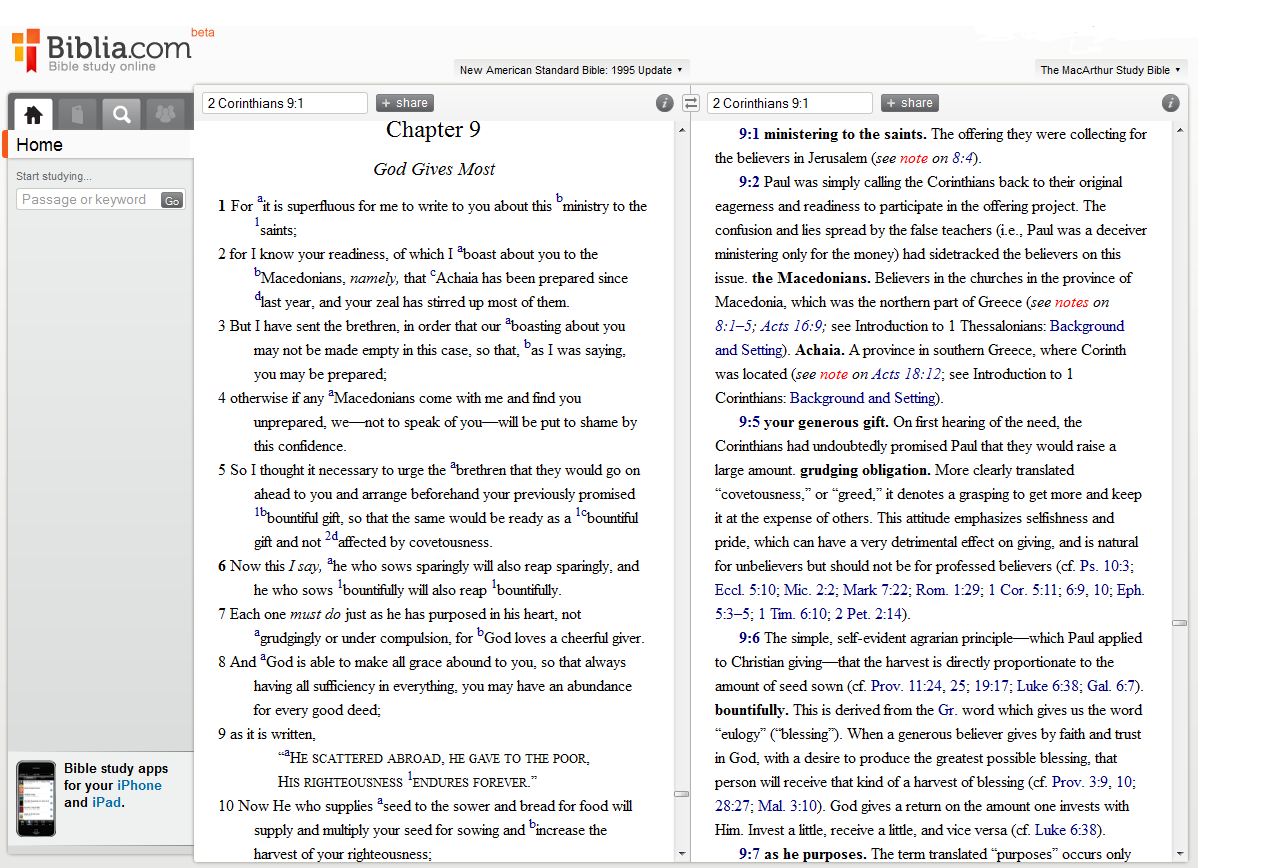
2. Biblia.com Bible study online. Today also marks the release of an amazing free Bible study tool online called biblia.com. Many of us have grown familiar with the great website biblegateway.com, but here we have a program even more robust, which links users directly to any books they own in Logos Bible Software.

Here's a screenshot:


The Logos Blog announcement explains,
Biblia.com offers thousands of resources for searching and reading online. Everyone can use a small collection of books (including more than a dozen bible translations). A free account allows access to dozens more free books. And Logos 4 users can access their library online, complete with synchronization of “last read” position between Logos 4, the iPhone/iPad, and Biblia.com! (The list of books available online is subject to publisher permission, as with availability through mobile applications.)

In the future, everyone will be able to purchase content at Biblia.com and use it wherever they choose: online, on mobile devices, in Logos Bible Software 4, etc.
Go over to biblia.com and see for yourself.

We are so blessed to live in an age with so many Bible study resources at our fingertips. May we use these tools not simply to grow in head knowledge, but to grow in holiness and intimacy with our Lord.

Friday, August 20, 2010

Logos 4 Mac Giveaway

Logos Bible Software is giving away thousands of dollars of prizes to celebrate the launch of Logos Bible Software 4 Mac on October 1. It's kind of a birthday party of sorts. Prizes include an iMac, a MacBook Pro, an iPad, an iPod Touch, and more than 100 other prizes.

I don't own a Mac, but I've been extremely pleased with Logos 4 on the PC, and am happy that all you Mac users out there finally get to have your own version.

Logos is having a special limited-time sale on both their Mac and PC base packages and upgrades, so this is a great time to expand your digital library. Stop by and check it out.

Related posts:

Wednesday, May 12, 2010

Respectable Sins small-group curriculum

One of the most helpful and convicting books I've read in the past couple years is Respectable Sins by Jerri Bridges. You can find my original book review here.

Now, this book is available in a Bible study format at an incredibly low price. Here's the announcement from NavPress:
Jerry Bridges believes that just as culture has lost the concept of sin, the church faces the same danger.

Available in an all-in-one book and group study guide, Respectable Sins Small-Group Curriculum teaches that there is no sin that is acceptable in God's eyes.

This topical Bible study includes wide margins for taking notes, and discussion questions at the end of each session.

This 9-week topical Bible study can be used as a tool for discipleship and can be done on your own or in a small group.
Click here to view a sample chapter of the new format.

Friday, April 9, 2010

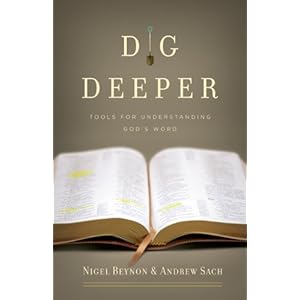
Book review: Dig Deeper

Dig Deeper is truly a gem. It's one of the best introductions to biblical interpretation I've ever read. Written in a fresh, readable style, the authors cover an amazing amount of territory in a very short book.

In the introduction, the authors write, "We want to help you to dig deeper to find hidden riches in the Bible...Pastors and scholars are a gift from God, and we should be grateful for their help. But we shouldn't be content to leave it entirely to the experts...This book is based on the idea of a toolkit...a set of practical tools to help you get to the bottom of any Bible passage." They then proceed with 16 different tools, from the Author's Purpose tool (most important), to the Vocabulary tool; from the Structure tool, to the "So What?" tool.

I've heard many people say, "I try to read the Bible, but it's so hard to understand!" This book could radically improve your Bible study and devotional life. It moves at a rapid pace while not missing weighty concepts. It gives a broad sample of biblical texts and warns of common interpretive errors. One of its greatest strengths is a short exercise at the end of each chapter, and then a brief example of how all the tools work together at the end of the book.

There are two areas that would have made this book even better. First, the authors should have included a full chapter on history and cultural background. They could have called it the "culture tool." Re-creating the original setting, manners, customs, geography, archaeology, etc. are all a vital part of fully understanding a passage. Secondly, I have to respectfully disagree with their approach to prophecy (p. 107 and 122). They represent a classic covenantal position which misses the unconditional nature of the Abrahamic covenant and departs from the same literal hermeneutic they recommend elsewhere.

But with these 16 practical tools in hand, you can finally dig deeper into God's Word. Read it. Study it. Enjoy it. And let God radically change your life.

New Blog

Today I'm closing up shop and launching a new blog called Pinch of Clay. You can visit it by clicking here . Please stop by and...