Showing posts with label jesus christ. Show all posts

Thursday, April 19, 2012

Am I Really a Christian?

As I mentioned in a previous post, we're using Wednesday evenings at First Southern to journey through a discipleship program called "Growing in Christ."

Our first series was "Am I Really a Christian?" based loosely on Mike McKinley's book that shares the same name. It focused on the need to examine ourselves spiritually and to look for evidence of being truly born again.

We recently concluded this first course, but it's not too late to follow along! All the handouts and even some of the audio recordings are available online. This would make a great self-guided study of basic Christianity.

Here's a complete list of the lessons:

"Am I Really a Christian?"
Growing In Christ, Course 1

Lesson 1:  Am I Really a Christian? (handout | request audio)
Lesson 2: More than a Name (handout | request audio)
Lesson 3: The New Birth (handout | request audio)
Lesson 4: Saving Faith (handout | request audio)
Lesson 5: Dead to Sin (handout | request audio)
Lesson 6: Finishing the Race (handout | request audio)
Lesson 7: Loving Others (handout | request audio)
Lesson 8: Contentment (handout | listen to audio)
Lesson 9: Assurance (handout | listen to audio)
Lesson 10: You're Not Alone (handout | listen to audio)

As you can see, some audio is available, though our podcast service has a limited data plan so I wasn't able to upload all of the lessons. The others are available by request. Just click on the link or leave a comment below and I can send you a copy of the other audio lessons.

Wednesday, February 29, 2012

The Jesus Discovery?

James Tabor, the controversial archaeologist who produced the "Lost Tomb of Jesus" a few years ago is back in the news again. Tabor has just released his findings from a robotic excavation of a tomb in East Talpiot, Jerusalem.

This tomb is thought to predate the fall of Jerusalem in 70 AD. It was first studied in 1981 but was then sealed under a condominium. However, a newer excavation using robots has revealed a four-line Greek inscription and a controversial image (a Christian fish symbol? a nephesh tomb marker?).

Tabor suggests these inscriptions teach us about early Christian views of the resurrection, and that Jesus' body was initially buried at the Holy Sepulchre site, but was later relocated to the Talpiot tomb. The full findings are in a newly released book The Jesus Discovery by Tabor and Jacobovici. It has already skyrocketed to #1 in all of its categories at Amazon and has an overall rank of #174.


Obviously, Tabor's thesis contradicts the biblical record (Matt. 28:5-8; Mark 16:2-8; Lk. 24:1-8; Jn. 20:1-10) and attacks the gospel itself (1 Cor. 15:12-19). But it is also shoddy archaeology, plain and simple. Tabor has a knack for the sensational (and the lucrative?) that led one scholar to remark archaeology has been “hijacked in the service of non-scientific interests.” The excavation on this tomb is noteworthy, but any conclusions by Tabor must be taken with more than a grain of salt - more like a heaping spoonful.

For updates to this developing story, check out the Bibleplaces Blog by Todd Bolen, former archaeology professor at the Master's College IBEX campus in Israel.

Monday, February 27, 2012

Church of the Holy Sepulchre

The final week leading up to Christ's death and resurrection is known as His "Passion Week" because of the intense suffering our Lord experienced. It's almost unthinkable how much our Lord packed into one week -- from His symbolic anointing by Mary, to His triumphal entry, to His cleansing of the temple, to His controversial "woes," to His Olivet Discourse on the second coming, to His Last Supper. Through it all, the Son of Man stayed focused on His mission and "loved us to the uttermost" (John 13:1).

We must not forget that Jesus' death and resurrection were real events that took place in space and time. This is not the stuff of fairy tales. You can hop on a jet today, and in less than 24 hours, see the very place where Jesus died and rose again. The traditional site of Golgotha and the Empty tomb is the Church of the Holy Sepulcher in Jerusalem. To learn more about this famous church, I encourage you to watch this 3-D video.

All I remember from visiting the tomb years ago was the smell of incense; the dark, cold, maze-like stone interior; the somber Catholic and Orthodox priests; and the crowds of tourists. Hardly edifying.

But this video peels back the layers of the church and explains how it inherited its puzzle-like design. After watching the first couple minutes on the present day church, I encourage you to see the church at the height of the Byzantine Period (6:30 into the video). It must have been quite a spectacle.

Then travel back further in time and witness how Rome tried to erase all memory of Jesus by building a pagan shrine to Jupiter over the empty tomb (9:00 into the video). How ironic. Jupiter has now been relegated to books on Roman mythology and the name of a planet 400 million miles away. Meanwhile, the gospel of Jesus is spreading like wildfire and changing the lives of people around the world. We serve a risen Savior. He lives!


HT: Chris McKinney

Thursday, December 22, 2011

A fickle crowd?

It seems funny to bring up Palm Sunday just a few days before Christmas. But a student in one of my classes recently asked a great question about the crowd on Palm Sunday versus Good Friday:

"I read a blog post by Kevin DeYoung that argued that it was two different groups of people. The ones shouting "Hosanna" were Galilean pilgrims and the ones shouting "Crucify Him" were the Jerusalem crowd. What are your thoughts on this?"

Here was my reply:

You've raised a really interesting question about the crowd in Jerusalem during the Passion Week. David Hazard vividly captures the traditional view:


In all probability, the same people who shouted "Crucify Him!" were still hoarse from shouting, "Hosanna!" ("Seeing More of God," Discipleship Journal, Jan-Feb 1995, p. )

But many scholars, as Kevin DeYoung pointed out, dispute this fact. Thus R. T. France writes,

The location is still outside Jerusalem (v. 1), and Jesus will not in fact enter the city until v. 11. The traditional description of this scene as the ‘Triumphal Entry’ is therefore inaccurate: it describes Jesus’ approach to the city, not his entry. The shouting crowd are therefore the pilgrim group to whom we have already been introduced, and Mark puts their identity beyond doubt by using the phrase οἱ προάγοντες καὶ οἱ ἀκολουθοῦντες (v. 9). This is not yet, then, the Jerusalem crowd, but the pilgrims, probably mostly like Jesus Galileans, who are accompanying him and his disciples to the city for the festival. (See on 15:40–41 for some comments on the composition of this crowd.) They are already predisposed, after the event at Jericho, to favour Jesus and to echo Bartimaeus’ evaluation of him as υἱὸς Δαυίδ. Those who react with enthusiasm to the arrival of the Galilean Messiah are thus Jesus’ Galilean supporters rather than the potentially more sceptical Jerusalem crowd whom he has not yet encountered. Matthew adds a note to make this contrast explicit in 21:10–11, but even in Mark the point is clear. There is no warrant here for the preacher’s favourite comment on the fickleness of a crowd which could shout ‘Hosanna’ one day and ‘Crucify him’ a few days later. They are not the same crowd. The Galilean pilgrims shouted ‘Hosanna’ as they approached the city; the Jerusalem crowd shouted, ‘Crucify him’. (New International Greek Testament Commentary: The Gospel of Mark, p. 430)

Yet others remain convinced. William Hendriksen says,

Unbiased reading of the Triumphal Entry accounts (Matt. 21:8–11; Mark 11:7–10; Luke 19:36–38; and John 12:9–18) does not leave one with the impression that all these Sunday enthusiasts were Galilean pilgrims. See, for example, John 12:17. Though we must make allowance for the figure of speech called hyperbole, we will probably have to agree with the conclusion of the Pharisees, “Look, the world has gone after him!” (John 12:19). Similarly, it would be difficult to defend the proposition that on the following Friday none but Pilate’s subjects were screaming “Crucify him.” Admittedly many of them may well have been exactly that. But to exclude from Calvary a goodly number of people who, in order to participate in the feast, had come from elsewhere, including Galilee, would amount to doing injustice to the probabilities. As well as there were Galilean women in that crowd (Mark 15:40, 41) there must have been Galilean men also. With respect to variety of visitors, Passover probably resembled Pentecost. See Acts 2:5–11. Eagerness to see what was going on at Calvary must have been widespread. Curiosity does not recognize ethnic boundaries. And as concerns the attitude of the people, including the Jerusalemites, toward Jesus during the days intervening between the Triumphal Entry and Good Friday, “the huge crowd [regardless of where they came from] enjoyed listening to him” (Mark 12:37). It would seem therefore that the only logical conclusion is that on the part of many a change of attitude had actually taken place.

How must we account for this? The fickleness or instability of the human heart and mind apart from regenerating grace enters into the answer. Other factors deserving consideration are:
  • The pressure exerted upon the crowd by the chief priests. We are distinctly told, “But the chief priests stirred up the mob to get him [Pilate] to release to them Barabbas instead (of Jesus).” Read Mark 15:11; cf. Matt. 27:20. It was hard to resist such pressure. See John 9:22; 12:42; cf. 20:19.
  • The fact that in the end Jesus did not prove to be the kind of Messiah the people desired and were expecting.
  • Sinful ignorance of Scripture. With increasing clarity the Old Testament draws the picture of the coming Redeemer: Gen. 3:15; II Sam. 7:12, 13; Ps. 72; 118:22, 23; Isa. 7:14; 9:6; 11:1–10; 35:5, 6; 42:1–4; 53; 60:1–3; Jer. 23:6; 31:31–34; Mic. 4:1–5; 5:2; 7:18–20; Hag. 2:1–9; Zech. 3:8; 6:9–13; 9:9, 10; 13:1; Mal. 3:1–4, to mention only a few of the many messianic prophecies. These predictions associate with Messiah: peace, pardon, healing, righteousness, vicarious suffering, spiritual cleansing.
The lesson is obvious: Do not neglect the prayerful study of the Scriptures! And do not neglect to take the Bible’s precious truths to heart! (New Testament Commentary: Mark, p. 638)

In all likelihood, there was some overlap between the two groups. The Triumphal Entry probably did include some Judeans coming out to greet and praise Jesus. (After all, Jesus' local teaching, healing, and raising of Lazarus had not been done in a corner.) And the Crucifixion probably did include some Galileeans who had been influenced and corrupted by the religious leaders. This would not be the first time that Galileeans turned their backs on the Lord. (Just recall the feeding of the 5,000, where scores chased after Jesus to make Him king but soon turned back and no longer walked with Him. Jn. 6:15, 24, 66).

What do you think? Whose viewpoint do you find more convincing? And does this have any significance in our understanding of the overall gospel narrative?

Wednesday, April 27, 2011

The birth certificate

I'm sure by now you've seen it. It would be almost impossible not to; it's all over the news. President Barack Obama has released his Hawaii birth certificate hoping to satisfy critics once and for all that he's a U.S. citizen. A man's origin came into question, and some official proof was needed to settle the argument.

That got me thinking, something very similar happens to Jesus in the Gospel of John. The Jews accuse Jesus of being a fake, a fraud, an impostor. They seriously doubt whether He is the Son of God. After all, there is no certified paper with these words:
Name: Jesus Christ
Heavenly Father: God
Biological Mother: Mary
Conceived By: Holy Spirit
Birth Date: Existed Before the Foundation of the World
Physical Place of Birth: Bethlehem in Judea

So, how can God prove to mankind that Jesus is truly His Son? He does it at the very outset of Jesus' public ministry, when Jesus is baptized. And John the Baptist is standing by to report the event for us:
“I saw the Spirit descend from heaven like a dove, and it remained on him. I myself did not know him, but he who sent me to baptize with water said to me, ‘He on whom you see the Spirit descend and remain, this is he who baptizes with the Holy Spirit.’ And I have seen and have borne witness that this is the Son of God." (Jn. 1:32-34)
When no birth certificate is available to verify His Son, God does something even better. He speaks audibly from heaven, He sends down His Holy Spirit in the form of a dove, and He puts John on the scene to witness and report the events for us. 

If there was ever a question about Obama's origin, today's release of the birth certificate would seem to settle the case. And if there was ever a question about Jesus' origin, John chapter 1 provides all the proof we need to believe that Jesus is truly the Christ, the Son of God, and that believing, we would have life in His name (Jn. 20:30-31).

Sunday, April 24, 2011

Jesus is alive!

Why are you looking for the living among the dead?” Two angels asked the women on that first Easter Sunday. “He is not here, but He has been resurrected!”

Jesus, who suffered a gruesome death just three days earlier, now stood in triumph over sin and death. The tomb was empty! Jesus was alive! God had raised up His Son! And the world would never been the same.

The story is told of a Muslim in Africa who surrendered his life to Jesus Christ. When asked why he’d become a Christian, he replied,

“Well, it’s like this. Suppose you were going down the road and suddenly the road forked in two directions, and you didn’t know which way to go. And there at the fork in the road were two men, one dead and one alive—which one would you ask which way to go?”

Truly, Jesus is alive, and worthy of our trust and devotion.

May we continue to celebrate the wonder of Christ’s death and resurrection for our forgiveness, and to share this astounding message with others.

Friday, April 22, 2011

Amazing love

But He was pierced because of our transgressions,
crushed because of our iniquities;
punishment for our peace was upon Him,
and we are healed by His wounds.
We all went astray like sheep;
we all have turned to our own way;
and the LORD has punished Him
for the iniquity of us all. (Is. 53:5-6)

Here's a video that reminds us of God's amazing love demonstrated by sending Jesus to the cross.


Take time today to meditate on the work of the cross. God's love is amazing, and available to all who turn from sin and accept God's free gift of eternal life through the death and resurrection of His Son.

Related posts:

Tuesday, March 22, 2011

CMC Christian club


The Christian club at Copper Mountain College is now meeting on Wednesdays at noon. If you or someone you know is a student at CMC, please join us! We'll be meeting each week at the new amphitheater just outside Student Services.

This is a great way to learn more about Christianity in a friendly setting, to have your questions answered, and to be encouraged in your faith. Grab a lunch and come discover Jesus from the book of John (new visitors will receive a free copy).

I'm excited to be partnering with Pam Hoyt and the student leaders to get this group back up and running. For more information, please email phoyt[at]cmccd[dot]com, or just drop by this Wednesday at noon.

Thursday, March 10, 2011

When weak becomes strong

Two of the most common "adversative" or "negative" conjunctions in Greek are δέ (de), and ἀλλὰ (alla). δέ is the weaker of the two, and can be translated either "and" or "but" depending on the context. ἀλλὰ, on the other hand, is a stronger contrast. Of the 628 times it appears in the New Testament, only once is it translated "and," and in this instance, it still carries an adversative idea (Mt. 18:30). The vast majority of the time, it is translated "but" or "yet."

In the Sermon on the Mount, when Jesus contrasts the external rules of the Jewish tradition with the internal laws of His Messianic kingdom, I naturally expected Jesus to choose the strong adversative ἀλλὰ. But this isn't the case! In all six instances, He actually chooses the weaker conjunction δέ:

Matthew 5:22 But I tell you,     ἐγὼ δὲ λέγω ὑμῖν
Matthew 5:28 But I tell you,     ἐγὼ δὲ λέγω ὑμῖν
Matthew 5:32 But I tell you,     ἐγὼ δὲ λέγω ὑμῖν
Matthew 5:34 But I tell you,     ἐγὼ δὲ λέγω ὑμῖν
Matthew 5:39 But I tell you,     ἐγὼ δὲ λέγω ὑμῖν
Matthew 5:44 But I tell you,     ἐγὼ δὲ λέγω ὑμῖν

Why didn’t Jesus use the stronger ἀλλὰ to show the sharp contrast between the Jewish traditions and His own teaching? Perhaps it's because contrast has already been supplied by the pronoun ἐγὼ, which is emphatic. Lit., He says, “But I Myself tell you.” Leon Morris writes,
“[Jesus] uses the emphatic ἐγώ. France comments, “This is not a new contribution to exegetical debate, but a definitive declaration of the will of God. It demands (and receives, 7:28–29) the response, ‘Who is this?’ Thus this passage contributes another aspect to the presentation of Jesus as the Messiah which is Matthew’s overriding purpose.”

I suspect that in this case, using the stronger adversative conjunction ἀλλὰ may have actually stolen emphasis away from the pronoun, where Jesus wanted all His shock and emphasis to land. So Jesus instead chose a weaker conjunction and put all the emphasis squarely on the pronoun ἐγὼ. He says, "It is I alone, and not the tradition of the elders, who will instruct you in God's Law."

A new authority had arrived in town. His name was Jesus, and He was singlehandedly overturning centuries of oral tradition with one sermon.

Saturday, December 18, 2010

What is the purpose of life?

This video was shown at our Christmas Missions Banquet last night. Our guest missionaries this year came from Scandinavia, and are spreading this video for people to see. It's an outstanding presentation. I only wish more Americans would have the opportunity to hear such a clear and concise summary of the gospel too.

The video is in Finnish (which you'll notice sounds a lot like the Elvish language from Lord of the Rings), but it has English subtitles. Take a few minutes to watch it. It really is a great reminder of the power and simplicity of the gospel, and that Jesus is the only name under heaven by which we can be saved.


Miksi minä olen täällä? - In English from Jere Valkonen on Vimeo.

Sunday, December 5, 2010

Jesus the Prophet

When appearing to the shepherds that first Christmas night, the angel announced, "today a Savior, who is Messiah the Lord, was born for you in the city of David" (Lk. 2:11). But who was this Messiah? Why did He come? And what should be our response?

"Messiah" is Hebrew for "anointed one." It comes from the word mashach, which means "to anoint." There were three kinds of people anointed by God in the Old Testament: the prophet, priest, and king. These were the three branches of government in ancient Israel, and each had a special duty to perform. The prophets were to be God's spokesmen. The priests taught the law and oversaw the sacrifices. The king protected and ruled over the people.

At the outset of their ministry, these three offices would often be anointed with perfumed olive oil to publicly show they were appointed by God (sort of an inauguration ceremony). But more importantly, this oil symbolized God's Spirit dwelling in them and empowering them for His special task. Jesus perfectly fulfilled all these roles as the true Messiah.

It is simply impossible to grasp the meaning of Christmas without some idea of these three messianic roles. John Walvoord explains:
Taken together, the three offices of Christ as Prophet, Priest and King are the key to the purpose of the incarnation. His prophetic office was concerned with the revelation of the truth of God; the priestly office was related to His work as Saviour and Mediator; His kingly office had in view His right to reign over Israel and over the entire earth. In Christ the supreme dignity of these offices is reached.

On Sunday, we began an advent series on this subject and looked at Jesus as Prophet. There were three points to our outline:
  1. Moses spoke of a coming prophet. As Moses' life drew to a close, and Israel prepared to enter the Promised Land, he warned them of dabbling in the occult and practicing witchcraft. Instead, they were to await another prophet "like him" whom God would send (Deut. 18:15-22). There were indeed many prophets in Israel's history like Samuel, Elijah, and Jeremiah, but none achieved the status of Moses or mediated a new covenant with God's people. Only Jesus could truly fulfill this prophecy.
  2. Many recognized Jesus as the fulfillment of this promise. After Jesus fed over 5,000 people, the crowds exclaimed, "This really is the Prophet who was to come into the world!" (Jn. 6:14). And after offering Himself as living water, the people said in amazement, "This really is the Prophet!" (Jn. 7:40). After the Apostle Peter healed a lame man in Jerusalem, he preached Christ crucified and risen. He warned of judgment and called the people to repentance and restoration. He clearly identified Jesus as the prophet whom Moses had foretold. (Acts 3:17-24). 
  3. You are responsible to listen and obey His words. If Jesus is truly the prophet like Moses, what should our response be? We must listen to Him (Dt. 18:15), because we'll be held accountable for what we do with His message (Dt. 18:19). If Jesus is the prophet, then we should thank God for revealing Himself to us in Christ (Heb. 1:1-2). If Jesus is the prophet, then we must believe every bold truth claim He has made (Jn. 14:6). If Jesus is the prophet, then we should do our best to study His word and know Him better.
Is Jesus more than a prophet? Yes. But He's certainly never been less than one. This is one important facet of His work as the anointed mediator between God and man. Jesus was the Word who became flesh (Jn. 1:14). Only He could gives us the words of life, and perfectly reveal the Father to us. No wonder God said on the Mount of Transfiguration, "This is my beloved Son. I take delight in Him. Listen to Him!"

Questions for thought and discussion:
  • What does it mean that Jesus was the “Messiah,” or “Anointed One”?
  • What famous prophets can you think of from the Old Testament? How does Jesus resemble them?
  • What is my duty to Jesus the Prophet? (Dt. 18:15)
  • What is the result if I ignore Him? (Dt. 18:19)
  • Who are the “prophets” or “experts” in society today that speak with authority? Do I trust them more than I do Jesus?
  • How can I better honor and obey Jesus’ words?
  • Does this apply to “red letter” words only? (2 Tim. 3:16-17)
  • Is it enough to believe Jesus was simply a prophet?
Sunday's sermons are usually uploaded to our weekly podcast, but we regret our CD recorder was not working this week.

Wednesday, November 10, 2010

True treasure

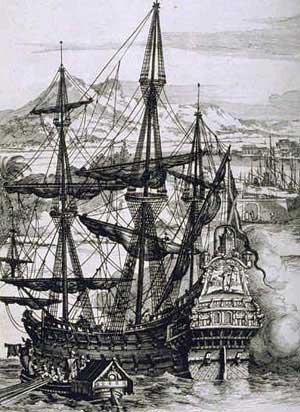
Many dream of “striking it rich,” but few actually succeed. Mel Fisher began his quest for riches in 1969. He started to search off the Atlantic Coast for the Atocha, one of the few remaining Spanish galleon shipwrecks never recovered. It was thought to contain a fortune.

For sixteen long years, using state of the art equipment, Fisher scoured the ocean floor for any sign of the ship. Finally, on July 20, 1985, his son Kane announced, “Put away the charts; we’ve found the main pile!” Their find was dubbed the “shipwreck of the century,” worth hundreds of millions of dollars, and has been compared to the discovery of King Tut’s tomb.

Did you know you, too, could strike it rich? I’m not talking about the lottery. The Bible says “Happy is a man who finds wisdom…for she [wisdom] is more profitable than silver, and her revenue is better than gold. She is more precious than jewels; nothing you desire compares with her” (Proverbs 3:13-15). Find wisdom, and you’ve hit the real jackpot.

Wisdom is the ability to make good and godly choices in life. It’s more than just an IQ. Wisdom is an attraction to everything good, and true, and beautiful. It is not driven by emotions. It carefully weighs each option. It acts responsibly. It thinks about long-term consequences. It is street-wise in a dangerous and confusing world. Imagine how different things would be if we all spoke and acted with wisdom!

So, how do we find wisdom? Proverbs 9:10 provides the treasure map: “The fear of the LORD is the beginning of wisdom, and the knowledge of the Holy One is insight.” To gain wisdom we must first develop a healthy fear and respect for the living God.

This means we must recognize that God alone is pure and powerful, able to tell us how life works. We must admit our own sense of direction is faulty. We must believe God’s Word is more reliable than our closest friend, our smartest professor, or our favorite talk show host. We must accept that Jesus alone can rescue us from our sin, for “in Him are hidden all the treasures of wisdom and knowledge” (Colossians 2:3).

True wisdom begins with the fear of the Lord. And the fear of the Lord begins with knowing Christ. Only then can we become truly rich. Even richer than Mel Fisher.

This article was written for publication in today's edition of our local paper, the Hi Desert Star.

Friday, October 29, 2010

When was Passover?

I administer an online Life of Christ class through The Master's College DEEP Program, and recently had a student ask this question. I thought this subject would probably interest many others too.
I'm a bit confused about which day the Passover happened: Thursday or Friday of Passion week, and just want to make sure that I'm understanding it correctly. On Thursday afternoon, the disciples were sent to request the upper room, and likely the lamb was slain that day. When sundown came, it was Friday (by a Jewish understanding), and the Passover was eaten at this time (correct?)...I guess the question enters in when reading John 18:28, clearly in the midst of Jesus' trials, when John writes that the Jews did not enter Pilate's Praetorium "in order that they might not be defiled, but might eat the Passover." This makes it sound like Passover was to be eaten Friday evening (or Saturday, by the Jew's understanding).

Here was my reply:

Jesus’ disciples must have sacrificed their lamb Thursday afternoon and eaten the meal together on Thursday night. Many other Jews went to the temple on Friday afternoon and ate their meal Friday at sundown. So the Lamb of God would have died just as thousands of lambs were being slaughtered in the temple.

There have been many proposed solutions to the discrepancy between John and the Synoptic gospels, but newer research seems to show two different nights that the Jews would celebrate the Passover meal.

Robert Thomas, in his Harmony of the Gospels, explains in detail:
The Jews of Jesus’ day apparently recognized a dual method of reckoning dates. In addition to the better known system which regarded each new day as starting at sundown, the policy of some was to reckon from sunrise to sunrise. Each of these customs finds support from the OT, the former in such places as Gen. 1:5 and Ex. 12:18 and the latter in Gen. 8:22 and 1 Sam. 19:11.

The system of reckoning used by Jesus and His disciples and described by Matt., Mark, and Luke was from sunrise to sunrise. John describes the events from the perspective of a sunset-to-sunset reckoning. Indications are that the difference in systems was also a point of disagreement between the Pharisees (sunrise to sunrise) and the Sadducees (sunset to sunset).

The synoptic accounts therefore see Jesus as eating a Passover meal the evening before His crucifixion. For those who followed the sunrise-to-sunrise reckoning, the Passover lambs had been slain a few hours earlier, in the afternoon. For them the slaughter took place on the 14th of Nisan, as did the Passover meal. The 15th did not begin until the next morning, Friday, at about 6:00.

The Johannine description, however, views the events from the standpoint of the Sadducees who controlled the Temple. Jesus was crucified at the normal time of killing the Passover lambs, that is, the afternoon of Nisan 14. Nisan 14 had begun at sunset Thursday and would not end until sunset Friday. This was the normal time for the lambs to be slain, but the Temple authorities had apparently compromised with those who followed the other calendar and allowed them to slay the lambs on Thursday afternoon. This difference explains why Jesus’ accuser had not yet eaten the Passover (Jn. 18:28). They were about to do it Friday evening, Nisan 15, which began at sunset.

If the above solution is correct (and it is impossible at this point to say dogmatically that it is, but it does seem to handle all the data more effectively than other proposals), then Jesus was crucified on Nisan 15 according to the sunrise-to-sunrise reckoning and on Nisan 14 according to the sunset-to-sunset method. (appendix 10, pp. 321-22)

Peter Walker hints at this also in In the Steps of Jesus:
There are clear suggestions in John’s Gospel…that Jesus’ crucifixion took place during Nisan 14 (not 15) – around the time when the Passover lambs were being slaughtered in the nearby Temple.

That may be part of John’s point (Jesus, he was implying, was now the true Passover lamb). Yet it would also have made sense historically for Jesus to celebrate it 24 hours early. Conceivably this altered schedule brought Jesus into line with other Jewish groups (the Essenes or Pharisees), who may have been operating on different calendars. Yet the main reason may have been starkly practical: Jesus knew that, if he waited another 24 hours, it would be too late. He would be dead. (p. 156)

At our church’s last communion service, I preached on 1 Corinthians 5:7 and found this whole connection between Christ and Passover to be quite amazing. Down to the tiniest detail, our Lord pointed to the importance and blessing of His substitutionary death.

Monday, September 27, 2010

Our identity in Christ

“For me, to live is _____.” How would you fill in that blank? What excites you? What gets you up in the morning? What occupies most of your thoughts, your time, your talents, and your treasure? Recently, I was reminded that as a Christian, my identity is found first of all in Jesus Christ.

I love being a husband, a daddy, and a pastor. I really enjoy hobbies like hiking, geocaching, reading, and stargazing. But most importantly, I want it to be said , “You can’t truly know Stephen Jones unless you know his Savior.” I want to be so acquainted with Jesus, so interwoven with Him, that our lives and identity are inseparable.

The idea of “union with Christ” appears many times in the New Testament in a tiny two-word phrase we often skim right past. It’s the phrase “in Him.” If you have surrendered your life to Jesus and trusted in His substitutionary death for your sin, then your life is already hidden “in Christ.” Ephesians 1:7 says “In Him we have redemption through His blood, the forgiveness of our trespasses, according to the riches of His grace.” And 2 Corinthians 5:21 says the Father “made Him who knew no sin to be sin on our behalf, so that we might become the righteousness of God in Him.” If you’re a Christian, then your identity is now wrapped up in
Jesus. You’re a little branch attached to the life-giving Vine.

This is the most wonderful news in the world! It means you can have assurance, because you now belong to Christ. You are His, and He is yours. There’s nothing you can ever do to earn or forfeit your salvation, because you’re already fused and fastened together with your Savior through faith. But there’s another implication to this. It means your life must be separate from the world. Your thoughts and behavior (walk) must be radically different than before you were saved. “Therefore as you have received Christ Jesus the Lord, so walk in Him” (Colossians 2:6). “The one who abides in Him ought himself to walk in the same manner as He walked” (1 John 2:6).

So, how does the Apostle Paul fill in the blank, “For me, to live is _____”? You’ll have to look up Galatians 2:20 to find the answer. But I’ll bet you can guess it has something to do with his identity in Christ. May the same be true of us.

Friday, June 11, 2010

God's wisdom revealed

Last week's Q&A and the previous week's message on Baptism are now available on our podcast site.

After this short detour from our regular exposition, we're heading back to 1 Corinthians next Sunday. We're getting ready to launch into chapter three, and I think it would be helpful to give a quick summary and review of the previous chapter:

"Preaching With Power" (1 Cor. 2:1-5). God not only chose the "foolish" message of the cross to save us (1 Cor. 1:18), but He also chose a "foolish" method of delivering that message. Rather than using the clever rhetoric and slick packaging available in Paul's day, God deliberately chose preaching -- a completely counter-cultural method -- to communicate gospel truth. We saw that just as in Paul's day, our biblical preaching must be plain, Christ-centered, humble, and yet powerful. You can listen to this sermon here.

"God's Wisdom Revealed" (1 Cor. 2:6-13). If God's message and method are so absurd, then who would choose to believe? Humanly speaking, no one. It's completely an act of the Holy Spirit, who reveals the "depths of God" to us. God's wisdom is infinite, and yet He has pulled back the curtain and allowed us to gaze into things once imperceptible. We should humbly praise God for what He has done in saving us through His Spirit. You can listen to this sermon here.

"Why Do So Many Reject Jesus?" (1 Cor. 2:14-16). Tragically, the natural man continues to reject the wisdom of the gospel and to live for himself. But the spiritual man, i.e. the man who has the Spirit of God living within him, now appraises the true value of the cross and actually shares the mind of Christ. You can listen to this sermon here.

We concluded our study of chapter two with several important applications:
  • Don't boast. This is the whole point of Paul's argument in these early chapters. The gospel should deeply humble us. We've got no reason to boast and quarrel. We are all brought to an equal level at the foot of the cross. Where am I manifesting pride in my life? How does the gospel confront this?
  • Don't budge. Our styles and preferences will vary according to culture, but no amount of style will ever make the gospel message more palatable to the unbeliever. We must staunchly defend the gospel and avoid anything that would water down the offense of the cross. Where have I been tempted to compromise in order to be accepted by others?
  • Do pray. If God alone can change the heart through His Spirit, we'd better get on our knees and pray brokenhearted over the lost. Oh that God would open their eyes before it is too late! How can I improve the frequency and fervency of my prayers for the lost?
  • Do prepare. The offense of the cross is not an excuse for unpreparedness. We must diligently learn the Scriptures, learn people, and learn common questions and biblical responses. We must be ready to give an answer for the hope that is in us. Where do I feel uncomfortable or under-equipped in sharing my faith? What can I do to change?
  • Do persevere. Don't grow discouraged because a person does not accept the gospel at first. Because the gospel is the power of God for salvation (Rom. 1:16), we can expect that through repetition, perseverance, patience, and prolonged exposure to the gospel, that people will respond. With whom have I grown discouraged and wrongly given up hope?
Photo credit: Ted Winder

    Wednesday, May 26, 2010

    Cherish the gospel!

    What do you most cherish in life? In ministry? What drives your private conversations, your small group discussions, your preaching? What gets the adrenaline pumping and stirs your heart with affection?

    Is it the gospel?

    While studying through 1 Corinthians, I've enjoyed reading some of D. A. Carson's paperback The Cross and Christian Ministry. The paragraphs below really caught my attention and invite deeper thought. It really summarizes the whole reason for movements like the The Gospel Coalition and Together for the Gospel, and hopefully the Great Commission Resurgence as well.
    What it means to be 'spiritual' is profoundly tied to the cross, and to nothing else...

    This lesson is especially important when so many Christians today identify themselves with some 'single issue' (a concept drawn from politics) other than the cross, other than the gospel. It is not that they deny the gospel. If pressed, they will emphatically endorse it. But their point of self-identification, the focus of their minds and hearts, what occupies their interest and energy, is something else: a style of worship, the abortion issue, homeschooling, the gift of prophecy, pop sociology, a certain brand of counseling, or whatever [we might add social justice here]. Of course, all of these issues have their own importance. Doubtless we need some Christians working on them full time. But even those who are so engaged must do so as an extension of the gospel, as an extension of the message of the cross. They must take special pains to avoid giving any impression that being really spiritual or really insightful or really wise turns on an appropriate response to their issue.

    I have heard a Mennonite leader asses his own movement in this way. One generation of Mennonites cherished the gospel and believed that the entailment of the gospel lay in certain social and political commitments. the next generation assumed the gospel and emphasized the social and political commitments. The present generation identifies itself with the social and political commitments, while the gospel is variously confessed or disowned; it no longer lies at the heart of the belief system of some who call themselves Mennonites.

    Whether or not this is a fair reading of the Mennonites, it is certainly a salutary warning for evangelicals at large. We are already at the stage where many evangelical leaders simply assume the message of the cross, but no longer lay much emphasis on it. Their focus is elsewhere. And a few, it seems to me, are in danger of distancing themselves from major components of the message of the cross, while still operating within the context of evangelicalism. It is at least possible that we are the generation of believers who will destroy much of historic Christianity from within - not, in the first instance, by rancid unbelief, but by raising relatively peripheral questions to the place where, functionally, they displace what is central. And what shall the end of this drift be?

    We must come back to the cross, and to God's plan of redemption that centers on the cross, and make that the point of our self-identification. (pp. 62-64)

    Oh may this be true in my life, my family, my ministry, our local ministerial, our denomination, and evangelicalism as a whole.

    Photo credit: El Struthio

    Wednesday, April 7, 2010

    Raised for our justification

    According to a 2007 poll by George Barna, 75% of Americans believe in the literal resurrection of Jesus Christ. What amazes me is not that 1/4 of Americans deny the resurrection (we would expect there to be skeptics today, just as there were in the time of Christ), but that 3/4 of Americans say they believe in the resurrection, and yet it makes no difference in most of their lives! For example, I noticed far more media hype about the iPad last week than the empty tomb of Jesus.

    But if the tomb really was empty, it should radically alter our lives. Why does Easter matter? Because in Romans 4:25, Paul says that Christ was "raised for our justification." Without Easter, there is no justification. With Easter, we have the opportunity to be justified of sin. Last Sunday, I posed three questions about justification:
    1. What is it? 'Justification' is an idea completely unique to Christianity. It is a legal term that means to acquit or pardon. It speaks not only of absolving guilt, but of being declared righteous by God. In the book of Romans, it serves as a bridge between the early chapters of condemnation (Rom. 1:18; 3:10, 23) and the later chapters of reconciliation (Rom. 5:11; 8:1). Justification is not something we can earn by works, but something we receive through faith. 
    2. What does it look like? In Romans chapter 4, Paul gives us a model of justification by faith. He points us to Abraham, the "father of a multitude." For many years, Abraham waited on God to fulfill his promises (Gen. 12:1-3), and even when he was old and "as good as dead," he did not waver in unbelief (Rom. 4:19). Because he trusted in God despite his circumstances, "it was credited to him as righteousness" (Rom. 4:22). In other words, God justified him by faith.
    3. What difference does it make? These things were not written merely for Abraham, but for us as well (Rom. 4:23-24). We have committed a heinous crime (sin). There is a heavy sentence for that crime (eternal death). But God has punished His Son in our place (the cross), and now declares us righteous through faith (justification). It is not enough to intellectually believe in the facts of Christ's death and resurrection, but to humble ourselves before God for our sin, and to look to the cross as our only means of pardon.
    Questions for thought and discussion:
    • What does it mean to be 'justified'?
    • How do you think Abraham must have felt to wait 25 years for God to keep His promise?
    • Read Genesis 21:1-5. Did God eventually give Abraham a son?
    • Read Romans 3:24 and Romans 5:1. What is the only way a person can be justified? 
    • According to Romans 5:1, what is the result of our being justified?
    • Have you trusted in Christ -- not merely in your head, but in your heart?
    • Write a prayer to God, thanking Him for His amazing work of raising Christ for our justification
    Sunday's sermon has been uploaded to our podcast site and is available for free download.

      Friday, April 2, 2010

      A lamb led forth

      He was oppressed and He was afflicted, yet He did not open His mouth; Like a lamb that is led to slaughter, and like a sheep that is silent before its shearers, so He did not open His mouth.  (Isaiah 53:7)

      Every year at Passover time, a thousand remaining Samaritans gather on Mount Gerizim for the Samaritan Passover. Their custom looks much like it would have two thousand years ago, when the Jews brought their sacrificial animals to the altar in Jerusalem to atone for sin.

      I had the privilege of witnessing the Samaritan Passover ten years ago, during my study time in Israel. With my own eyes and ears, I witnessed the lambs being led in, the spilling of blood, and the loss of life. It was an unforgettable experience. 

      Why did God command such a gory practice in the Old Testament? Because of this timeless principle: the price for sin is death. And as the author of Hebrews says, "Without the shedding of blood, there is no forgiveness" (Heb. 9:22). Ultimately, the Son of God Himself would come to earth, take the form of a man, and be slain for our forgiveness. All the sacrifices of the Old Testament pointed to His death on the cross. So on this Good Friday, let us praise the Lamb of God, who took away the sins of the world!

      Here's a short story I wrote ten years ago as I watched the helpless sheep and considered the Passover event from their perspective...

      ------

      ...My front left leg has been tied to this fence all morning. What I would do to reach that luscious patch of grass over there! It seems so close, yet so far away. Oh well. Such is the life of a sheep. Maybe I should sleep for a while until my Master comes to feed me...

      ...The sun hangs high overhead, and my stomach burns with the pangs of hunger. I've spent the last few hours just standing here alone in the courtyard, watching, waiting, listening, squinting through the blinding rays of the sun. An occassional beetle crawls by, or a fly pesters my face, but nothing out of the ordinary. I sure wish I could return to my flock, my family. Just one week ago, we grazed leisurely along the pastures of Mt. Gerizim. I wonder why were we brought into the city...

      ...It's mid-afternoon. At last, my weary body can find relief in the shade! But still, no water. Still, no food. Where could my Master be?! I've noticed some people gathering nearby, and there's a distinct scent of excitement in the air. I wonder what's going on. Oh, how I love surprises!...

      ...Many more people have arrived now, including some bothersome children. I wish these kids would just leave me alone! Half a dozen of them have kept pestering me for at least an hour -- jumping, yelling, and stomping, just beyond the reach of my shackles to ensure their own safety. What pitiful creatures. Meanwhile, the men seem to be gathering large olive branches and throwing them into nearby pits...

      ...It's late afternoon, and the men just finished pouring gasoline into the pits. Now they are throwing matches in... Whoa! look at those giant flames! What on earth is going on?! Could I be in danger, standing here in the corner of the courtyard?...

      ...Dusk is imminent. Many more people, robed in white, are flooding the courtyard. Great billows of smoke belch out of the fire pits, nearly suffocating me. As if the hunger and thirst weren't enough, my eyes are now stinging unbearably. A cacophony of human voices crescendo in song, and faintly in the distance, I hear the desperate cry of other sheep... But wait! Who is that approaching?! ... Master!! He's come to deliver me from this grevious nightmare!

      ...No, Master! There must be some mistake! Why have you brought me to the edge of the flame? Why do you trap me tightly between your legs? And why do you hold a dagger in your hand?!...

      Friday, March 26, 2010

      What is the Gospel?

      I first learned about the upcoming release of What Is the Gospel? in January at the Truth & Life Conference. From the moment I heard of it, I have been intrigued and highly anticipating it. And from the sound of its endorsements, it's going to even exceed my expectations.

      D.A. Carson says, “Read it, then buy a box of them for generous distribution.” But perhaps the best summary that expresses why I was immediately interested is written by J.D. Greer:

      “‘Gospel-centeredness’ has become the new, vogue term for pastors and churches. Greg Gilbert does a masterful job in this book explaining what that gospel actually is. He shows us that many well-meaning churches have distorted the gospel through false teaching, and others have abandoned the gospel because of embarrassment or simply neglect. This is a profound analysis of the gospel, expressed in a poignant, relevant way. I am very grateful for Greg’s prophetic call to return to the straightforward message of the cross.”

      To watch a short video, read a sample, or learn more about the book, click on Justin Taylor's blog here. Or, just go ahead and click here to buy one now (or a whole boxload, as Carson recommends).

      Saturday, January 30, 2010

      Christ our Sin-bearer

      It’s late in the week, but I thought I’d go ahead and post on last Sunday's message to refresh our minds and prepare our hearts for worship tomorrow.

      As we continue to study the work of God “behind the scenes” in our salvation, we looked last week at the atonement of Jesus Christ upon the cross. Thinking about the work of the Father, the Son, and the Holy Spirit in our salvation, Christ had perhaps the most central and visible part to play. In our text for the morning, 1 Peter 2:24-25, we saw three points:
      1. Christ took our place. Borrowing heavily from Isaiah 53, Peter uses many pronouns in these verses to signify the work Christ did for us. It was our sin He bore. It was our healing He achieved. It was our life He accomplished in death. This was only possible because He was a perfect, spotless substitute for our sins.
      2. Christ took our penalty. We took some time last week to really stop and consider what it meant for Christ to bear our sins. It meant that He took our full penalty and endured our curse, with all its physical, psychological, relational, spiritual agony. Here’s the quote I read by Wayne Grudem that captures so well just how much Christ must have suffered for us: “… to bear the guilt of millions of sins even for a moment would cause the greatest anguish of soul. To face the deep and furious wrath of an infinite God even for an instant would cause the most profound fear. But Jesus’ suffering was not over in a minute—or two—or ten. When would it end? Could there be yet more weight of sin? Yet more wrath of God? Hour after hour it went on—the dark weight of sin and the deep wrath of God poured over Jesus in wave after wave. Jesus at last cried out, ‘My God, my God, why have you forsaken me?’ Why must this suffering go on so long? Oh God, my God, will you ever bring it to an end?” (Systematic Theology, p. 576) The thought of Christ’s penalty really is staggering.
      3. Christ took our particular sins. We ended last week by asking, “for whom did Christ die? For all mankind, or specifically for the elect?” I shared several reasons for you to consider Christ’s atonement as being “limited." This includes Jesus dying for the sheep (Jn. 10:11), Him standing as the representative of a new people (Romans 5:12, 17-18), and the idea that His atonement really did accomplish its purpose in purchasing our redemption. I believe His death was infinite in value and sufficient to save all, yet His blood was applied only toward those whom God had chosen for the Savior to deliver. I then encouraged us all not to grow bewildered by this theological debate, but astounded at Christ’s finished work, and His promise of eternal life to all who will believe.

      As Charles Spurgeon said, let us continue to “abide hard by the cross, and search the mystery of His wounds.”

      Questions for thought and discussion:
      • Am I trusting alone in the finished work of Jesus upon the cross?
      • How should the cross “shrink us to true size,” as John Stott put it?
      • According to 1 Peter 2:24, what is the purpose of our salvation? So that we might do what?
      • What is one sinful pattern I need to “die to”?
      • Write out a prayer to Jesus, thanking Him for the penalty He paid and atonement He bought with His own blood

      Last Sunday’s sermon is now available for free download on our podcast site.

      Tomorrow, we will look at the Holy Spirit’s role in our salvation. I’m very excited to share about the Spirit and His quiet yet very important part to play.

      Related post:

      New Blog

      Today I'm closing up shop and launching a new blog called Pinch of Clay. You can visit it by clicking here . Please stop by and...